India
Maharashtra Tribal Students Protest Hostel Conditions, Restrictions
Students are demanding that the new GR must be withdrawn.

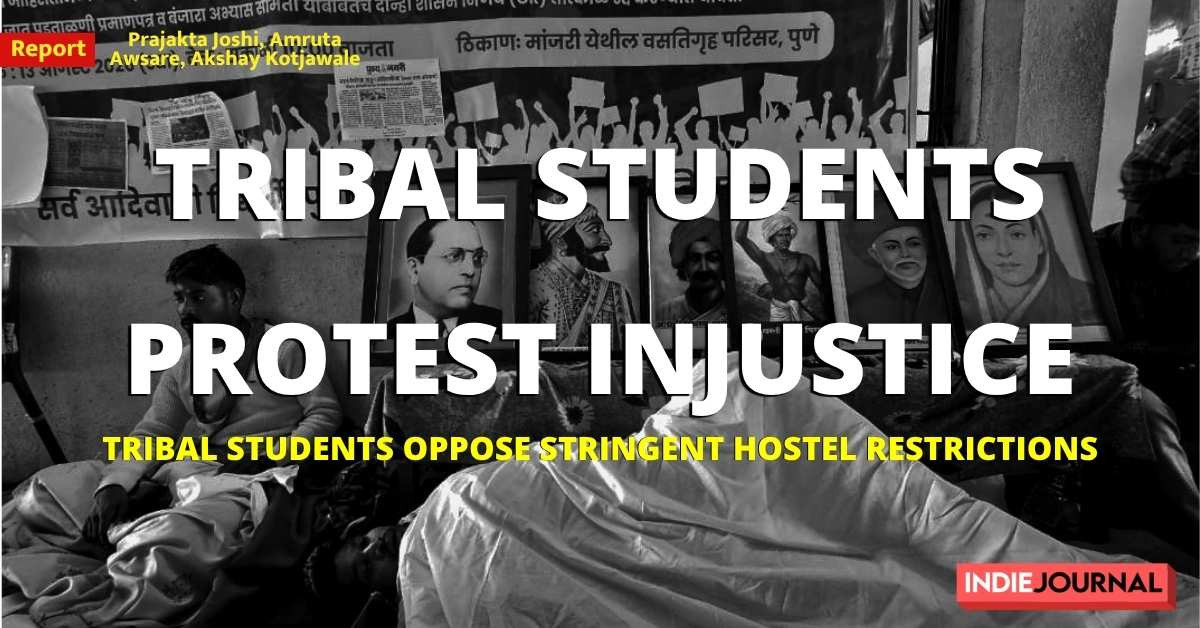
With additional inputs from Amruta Awasare and Akshay Kotjawale | Tribal students residing at different Scheduled Tribes (ST) Hostels in Pune are protesting the new guidelines issued by the State Government in a recent notification, that impose stringent restrictions on the eligibility of the students staying at these hostels across the state. The new Government Resolution (GR) first issued on August 5 and later revived on August 14 have imposed age caps and other restrictions over the students seeking to reside at the tribal hostels in the state. The GR has also decreased the allowances that the students get to support their higher education, enraging the students further. The students are demanding that the new GR must be withdrawn.
"We have raised several objections to the GR, but they seem to be falling on deaf ears. The conditions in this GR are hindering our fundamental rights itself,” said Sharad Thokal, an adivasi student residing at the Government ST Boys Hostel in Manjari, Pune. Thokal, who hails from Nayphad village in Rajgurunagar Khed taluka, has been on an indefinite hunger strike for the past seven days, along with two other students - Rahul Dhanave and Vijay Bhamare. Along with them, several students - girls and boys- from the ST hostels across Pune, are holding a sit-in protest outside the Manjari hostel. One of the major demands that the students have made includes the withdrawal of the age limit imposed by the government on the students allowed to take admission at the government tribal hostels.
Restrictions on hostel admissions
“The first GR said that the students will be allowed to stay in the hostels only till the age of 26. Is an adivasi student allowed to study only till he turns 26, and not after that? Now the age limit has been revised to 30 years, but we still oppose imposing an age restriction at all,” Thokal said.
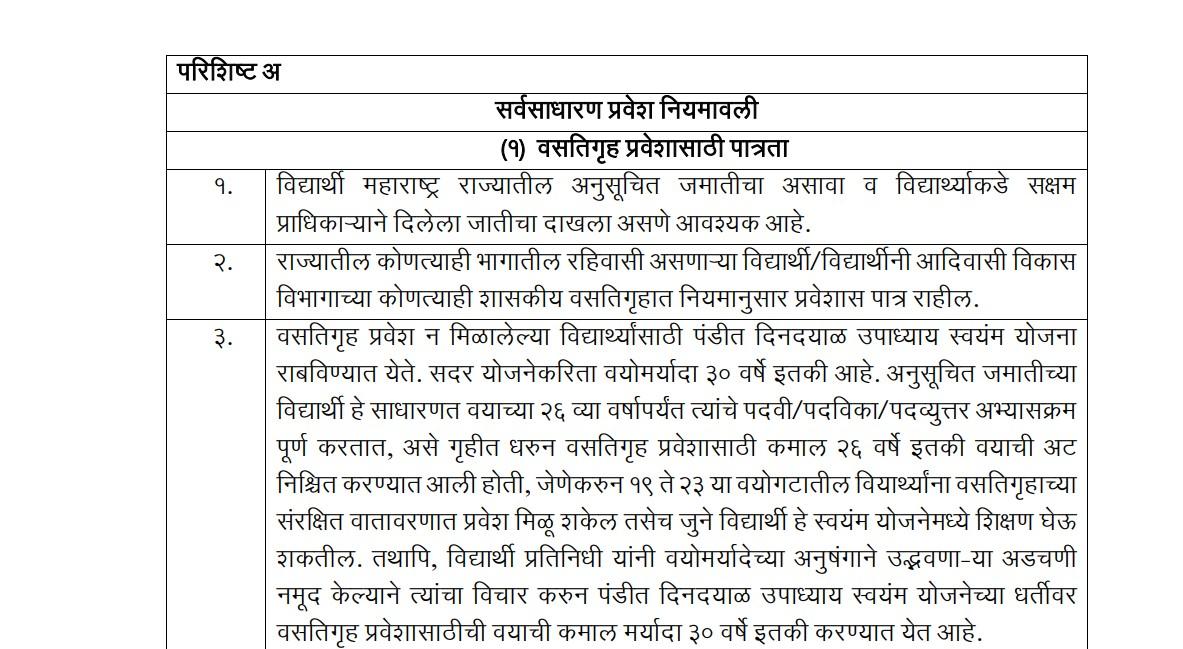
Vishal Kokane, another resident of the Manjari hostel who comes from Chinchawani village in Ahilyanagar’s Akole taluka, asked, “Why are they imposing an age limit for education? If we can answer the Maharashtra Public Service Commission (MPSC) examination till the age of 43, why are we allowed to avail the hostel till just 30? What if we want to do double graduation?”
The students also pointed out that the old GR regarding tribal hostels, dated November 11, 2011, did not impose any age limit at all. The students are also opposing the provisions which state that those who seek to stay at the hostel cannot hold a job.
“It is alright if they are talking about the students who have a government job. But why not let the students work part-time? It is necessary for the financial empowerment of some students. We do have the policy of ‘earn and learn’. All these students are anyway over the age of 18 years. Then why do they have an issue with them working?,” Thokal asked.
Further, the students have opposed the guideline in which the government has reserved 70 percent of the vacancies at the hostels for the students hailing from the same district, while only 30 percent remain for those from the rest of the state. Thokal said, “This could be harmful for the students who come to bigger cities from remote places, as these cities offer more educational opportunities.”
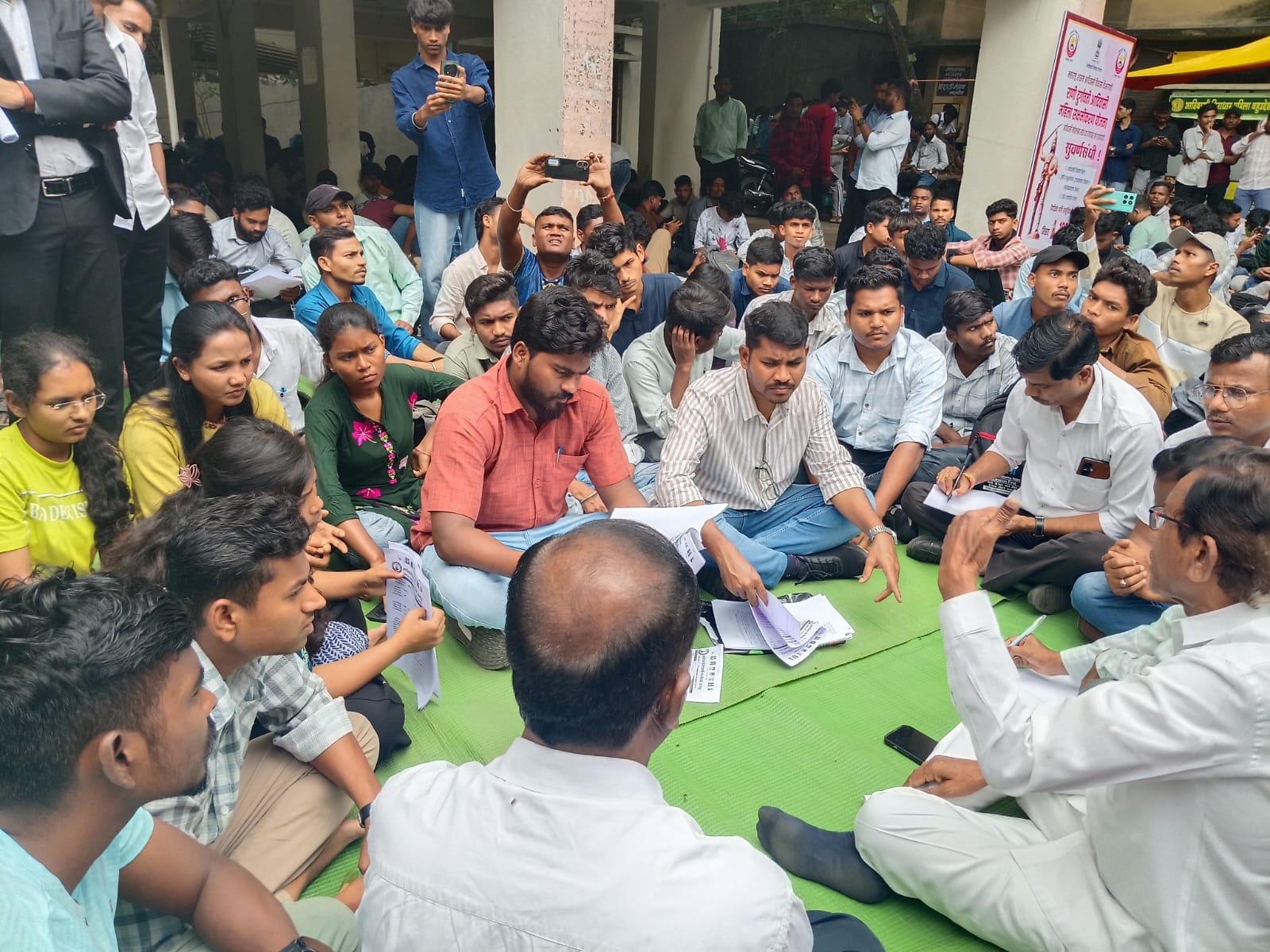
Tribal students residing at various tribal hostels across the state have been protesting since August 13, against the new GRs. Another stringent guideline, students alleged, states that the students who take admission at these hostels cannot be part of any organisation or groups.
“This is a violation of the freedom of expression given to us by our Constitution,” said Prashil Kodape, a resident of the Nagpur Government ST Hostel, who has been protesting outside the office of the Additional Commissioner, Tribal Development, in Nagpur.
Suchitra Pagi, a student from Palghar, who resides at the Government ST Girls Hostel in Gopalpatti, Hadapsar, said, “While the number of students coming from the adivasi community is increasing. But they are not increasing the number of hostels, instead they are making it more difficult for us to get admissions.”
Concerns about hostel location and amenities
“In 2006, the government had approved a hostel for the tribal girl students in Pune with a capacity of 500. It has been 20 years and the hostel has still not been built. Isn't this educational loss for our adivasi girls? So many girls have possibly been deprived of education because of this,” Kokane said.
The major tribal girls hostel in Pune is in Gopalpatti, Hadapsar. Pagi, who resides there, said, “We need a new building at a different location. Our hostel is located near the central railway line. The constant noise makes it difficult for us to study or sleep.”
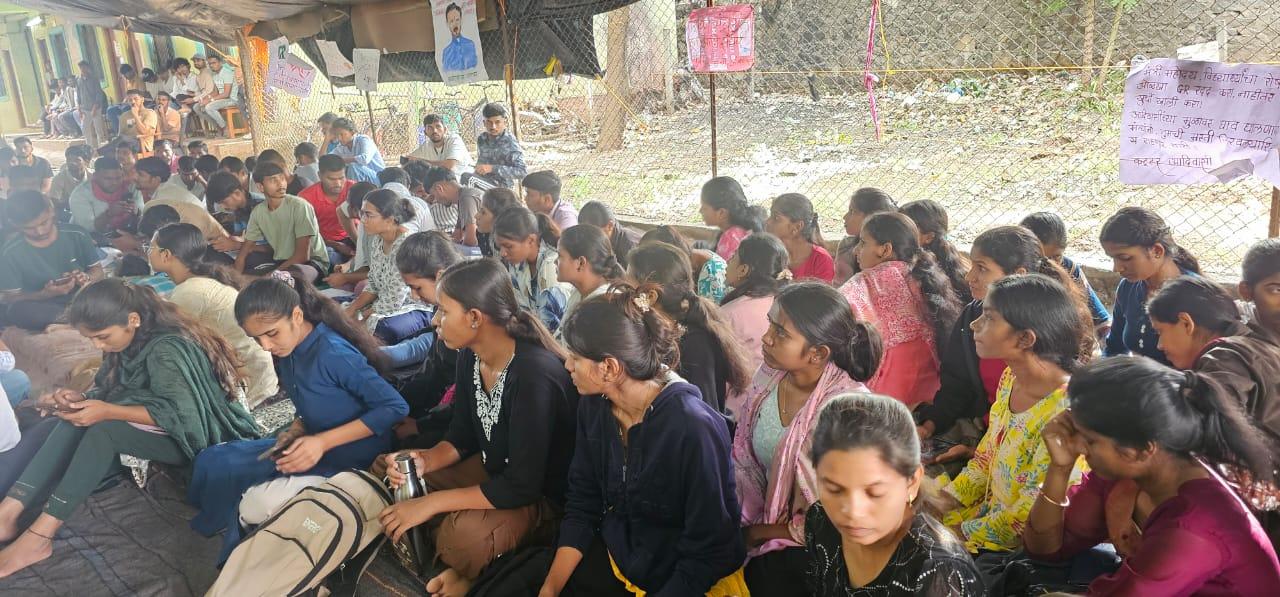
She also emphasised on the need for the hostel to be more centrally located and accessible. “The hostel is not near any bus stop. We have to walk to a bus stop, then take a bus to Hadapsar, and then travel to the central parts of the city where most of our colleges are located. The students have to spend over two hours just travelling everyday. We want the hostel to be at a centralised location, with accessibility to bus or metro routes. We have been fighting for this for the last 20 years, and yet they have not fulfilled this demand,” Pagi said.
She also alleged that tribal hostels do not get basic amenities like the ones that the hostels under the Social Justice Department do.
Shweta Irnak, a former resident of the Gopalpatti hostel added, “Those hostels have good kitchens, they have amenities like washing machines for their residents, while we are not given any such benefits.”
Kokane further said that cleanliness has been a recurring issue at the girls hostel. “In our hostel, there are 550 students. But only two housekeeping staff. How will they maintain cleanliness? Of course it will affect students and they will fall sick,” he said, adding that while this issue could easily be solved by the Tribal Development Project Officer, it has not been resolved yet.
“Why is our health not considered by the government? Why are they treating us like animals?” Pagi questioned.
Students oppose decline in allowances
Irnak alleged that the new GR is also trying to strip the students of the allowances that the students at the hostel get. “In the 2011 GR, the girl students were given Rs 100 per month for sanitary products. The new GR has increased the amount to just Rs 150. Is this amount enough for sanitary napkins considering the inflation?” she asked.
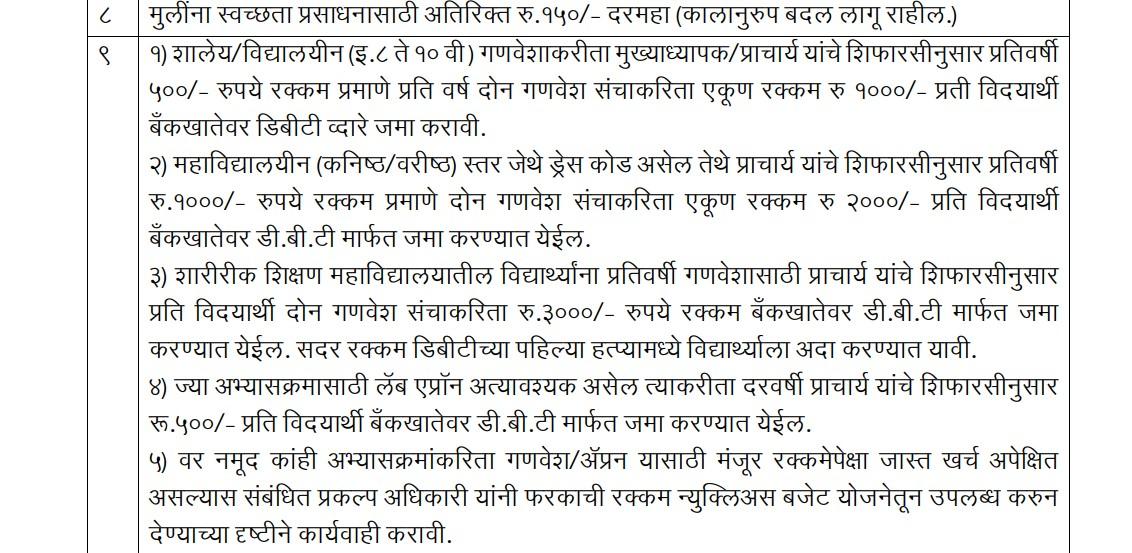
Prashil Kodape from Nagpur pointed out, “Earlier, the students would get a dress code allowance of Rs 2,000. The amount has now been reduced to Rs 1,000. As per the old GR, we would get an allowance of Rs 2,000 for our dissertation work. Now, even that has been reduced to Rs 1,000. This will lead to the educational loss of many adivasi students,” Kodape said.
While the GR states that the allowance is meant for uniforms in case the colleges have any, the protesters said that since many colleges do not have a particular dress code, the students often use this amount for the regular clothes that they need to wear to their classes everyday, as some students do not have sufficient money for that as well.
Questions about recruitments under PESA
“In 2017, the Supreme Court had ordered the State Government to remove the 12,500 non-adivasi applicants who were recruited for the posts reserved for the scheduled tribes using fake caste certificates. The government has still not recruited eligible adivasis candidates on those posts, despite the court’s orders. Moreover, non-adivasi candidates continue to get jobs reserved for the adivasis using fake certificates and the adivasis continue to be unemployed. Caste verification should be made stricter and those who submit false certificates should be punished,” Thokal said.
Apart from this, the protesters have also demanded a compensation of Rs 1 crore for the families of the girls who died after snake bites at an Ashram School in Gadchiroli. They have also asked that the government must take out a Rs 10 crore insurance policy for every student at the Ashram Schools,” Thokal added.
.jpeg)
“The Tribal Development Department has a budget of Rs 22,000 crores. Why are adivasi students still facing these issues? You take away adivasi lands, develop huge projects in their homes, then why are adivasis still suffering?,” he asked.
Protests to continue
Ganesh Irapate, a student from the Nagpur Tribal Hostel said, “We have been protesting since 11 am on August 13. The Department Secretary Mr Waghmare spoke to us over video conferencing the same evening. However, he did not answer the questions posed by the student representatives properly. We were not satisfied and we continued with our protest,” Irapate said.
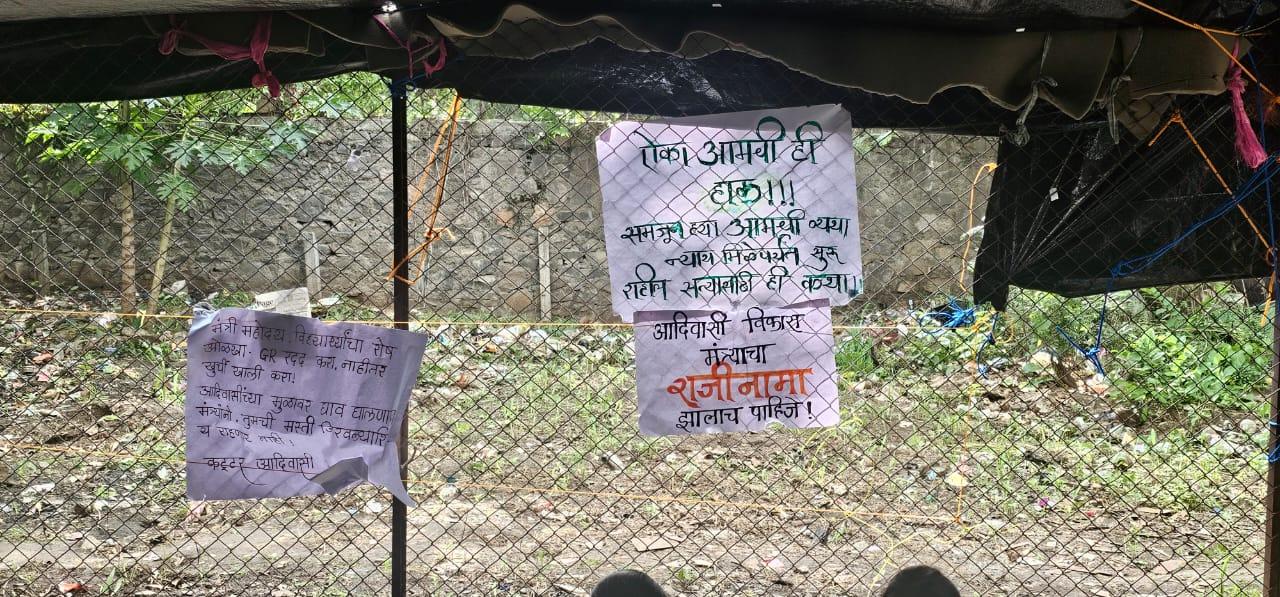
On Wednesday, August 19, a delegation of the students went to Mumbai to discuss their demands with the government officials. However, Saurabh Kokane, who was part of the delegation, said, “We met the department secretary and the concerned minister today. They told us that they will not cancel the GR. They also asked us to suggest any changes or issues we feel are there in the GR. They said the age limit will remain 30, and if anyone wants to study after that, they will consider providing a scholarship. But we do not accept that.”
The students have now decided to continue their protests until their demands are met. Suraj Bande, who was also a member of the delegation, told Indie Journal, “We wanted to discuss this issue with the Chief Minister, but they put a condition that we should first end our protest and the hunger strike and accept their conditions. Only then they would arrange a meeting with the Chief Minister. But if our demands are not going to be accepted,then what is the point of meeting the Chief Minister?”